Iran, War and Financial Markets: Is Gold About to Enter a Historic Bull Run?
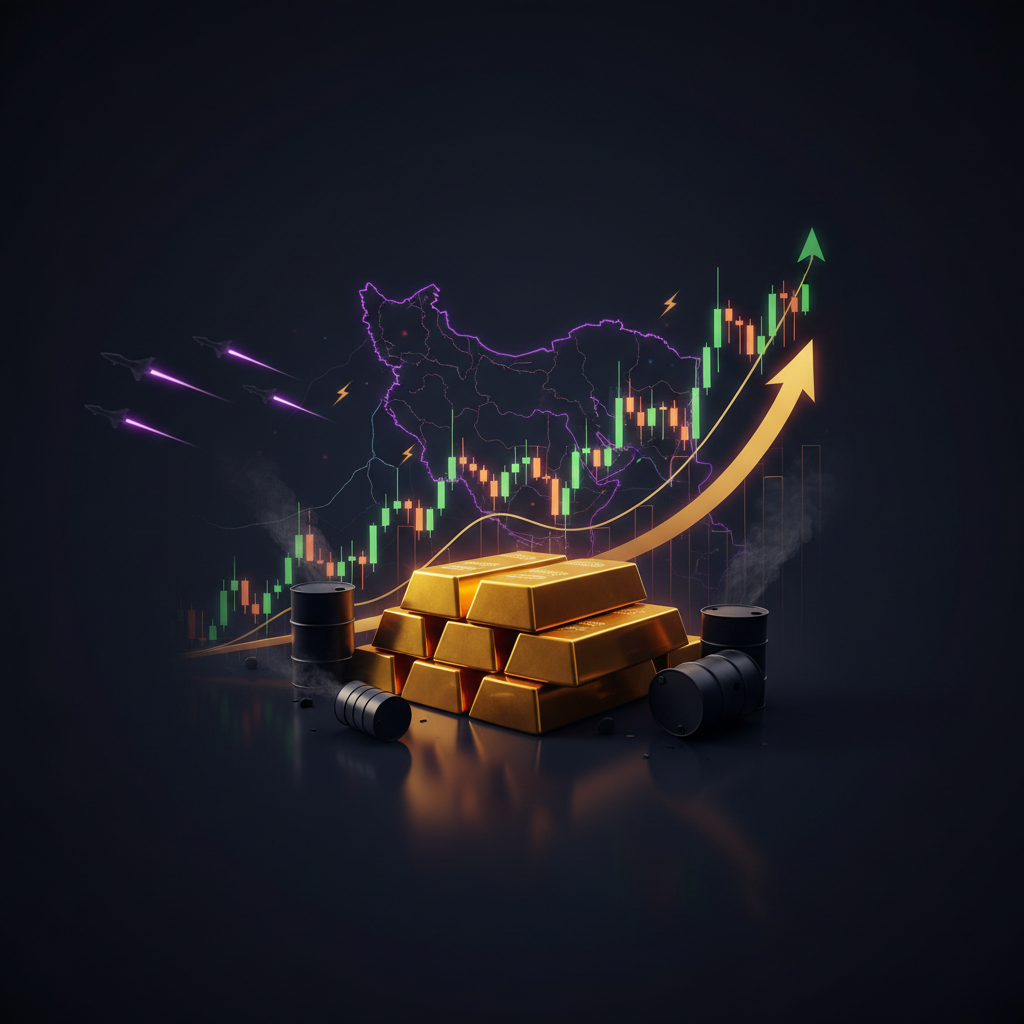
In every major economic cycle, there comes a moment when geopolitics and markets collide. The rising tensions surrounding Iran are once again putting global markets on edge, creating extreme volatility and major price movements — especially in gold.
Why Iran Matters More Than Most Conflicts
Iran is not just another geopolitical hotspot. It sits at the center of one of the most important energy chokepoints on Earth: the Strait of Hormuz. This narrow passage handles roughly 20% of global oil shipments, meaning any disruption can instantly affect global energy prices.
When tensions escalate in this region, markets do not wait for a full-scale war to react. They price in risk immediately. Recent developments have already demonstrated this dynamic. Oil prices have surged amid fears of supply disruptions, with analysts warning that a prolonged conflict could push prices above $100 or even higher if global shipping routes are severely impacted.
Energy markets react first. But they are rarely the last.
The Chain Reaction Inside the Global Economy
When geopolitical tensions impact energy markets, the effects spread through the global economy in several stages.
Stage 1 — Oil Shock
If supply routes are disrupted or threatened, oil prices spike. Higher oil prices mean more expensive transportation, higher manufacturing costs, rising food prices, and higher electricity costs. In short, inflation increases globally.
Stage 2 — Central Bank Panic
Central banks then face a nightmare scenario. If inflation rises while growth slows, the economy enters a condition known as stagflation. In this environment, interest rates remain high, growth slows, and markets become unstable. Even the IMF warns that sustained energy price increases could push inflation higher and reduce economic growth worldwide.
Stage 3 — Financial Market Volatility
Equity markets typically react badly to geopolitical uncertainty. Investors reduce risk. They sell stocks. They move capital into cash, the US dollar, commodities, and gold.
Why Gold Always Returns During Global Uncertainty
Gold has historically been one of the most important safe-haven assets in financial markets. This means that when uncertainty rises, demand for gold increases. The reason is simple.
Gold is scarce, globally recognized, independent of governments, and not tied to corporate profits. In times of crisis, investors seek assets that cannot default. Gold fits that definition perfectly.
Geopolitical instability has repeatedly been shown to increase gold demand as investors flee riskier assets.
The Iran Effect on Gold Prices
Recent geopolitical tensions involving Iran have already pushed investors toward gold and other defensive assets. Gold prices surged near record levels as safe-haven demand increased during the escalation of Middle East tensions. In some cases, prices moved above $5,000 per ounce, driven largely by geopolitical uncertainty and inflation fears.
However, gold's reaction during geopolitical crises is not always perfectly linear. Sometimes gold rises sharply. Sometimes it initially falls. Why? Because during extreme crises, investors often sell assets to raise liquidity. This phenomenon, sometimes called 'crisis trading,' can temporarily push gold down before the long-term safe-haven demand returns.
The Hidden Systemic Risk Behind the Current Crisis
Beyond energy prices and commodities, there is a deeper concern among macro analysts. The global financial system today is extremely fragile.
Consider the current environment: record global debt levels, high interest rates, fragile economic growth, and geopolitical fragmentation. Many economists believe the world economy is currently closer to a systemic crisis than most people realize.
The modern financial system depends heavily on confidence, liquidity, and stable supply chains. War threatens all three.
Supply Chains and Global Trade
The Iran conflict has already started disrupting global logistics networks. Air freight routes, shipping lanes, and cargo transport have been affected as regional security deteriorates.
Trade disruptions have increased shipping costs and reduced cargo capacity between major economic regions such as Asia and Europe. If these disruptions continue, global supply chains could experience severe stress. This would further increase inflation while slowing economic growth.
A Dangerous Macro Combination
When you combine all these factors together, the result is a dangerous macroeconomic environment. Possible outcomes include rising inflation, slowing economic growth, market instability, and increased geopolitical fragmentation.
In financial history, environments like this often lead to commodity bull markets, volatile currency movements, and large capital flows into defensive assets. Gold historically benefits from these conditions.
What This Means for Gold Traders
From a trading perspective, geopolitical crises often create powerful trends in gold markets. The typical pattern unfolds in several phases.
Phase 1 — Shock
Markets react to headlines. Gold spikes rapidly.
Phase 2 — Liquidity Panic
Investors sell assets to raise cash. Gold may temporarily drop.
Phase 3 — Safe Haven Demand
Institutional investors allocate capital to gold as protection against systemic risk. This phase often produces the strongest and most sustained price movements.
The Psychological Factor
Markets are not driven only by economics. They are driven by human psychology. Fear is one of the most powerful forces in financial markets. When investors fear systemic instability, they seek safety. Gold often becomes the ultimate psychological refuge.
Could the Global Economy Be Near a Breaking Point?
Some analysts argue that the current environment resembles previous periods before major economic crises. The combination of geopolitical instability, high debt levels, inflation pressure, and fragile financial markets creates conditions that are historically associated with major economic resets.
While it is impossible to predict exactly how events will unfold, one thing is clear. Markets are entering a period of heightened uncertainty.
Why Traders Must Adapt
In times like these, trading strategies that rely on constant market activity often fail. The most successful traders focus instead on high-probability setups, strong market structure, and volatility expansions.
This is exactly the kind of environment where disciplined trading systems become essential. When markets become chaotic, the ability to identify A+ trading opportunities becomes even more valuable.
Tools like the Moshiach GO Engine help traders cut through the noise by scoring market conditions and only signaling when all filters align — trend, momentum, ATR, compression, ADX, and session. In volatile geopolitical environments, this kind of discipline separates profitable traders from those who get chopped up by the market.
Final Thoughts
Geopolitical crises have always been catalysts for major market movements. The rising tensions surrounding Iran are a reminder that financial markets do not exist in isolation. They are deeply connected to global political realities.
For traders and investors, the key is not to predict the future perfectly. The key is to remain prepared. Because when geopolitics collides with financial markets, volatility often creates the biggest opportunities.
And in uncertain times, one thing remains constant. Markets reward those who are ready.
Want a structured H4 GO/WAIT decision engine?
GO ENGINE v2 scores trend, momentum, and structure — then prints GO or WAIT. No predictions. No noise. Only alignment. $29.99 one-time — lifetime access.