Swing Trading vs Scalping: Which Is Better for Funded Traders?
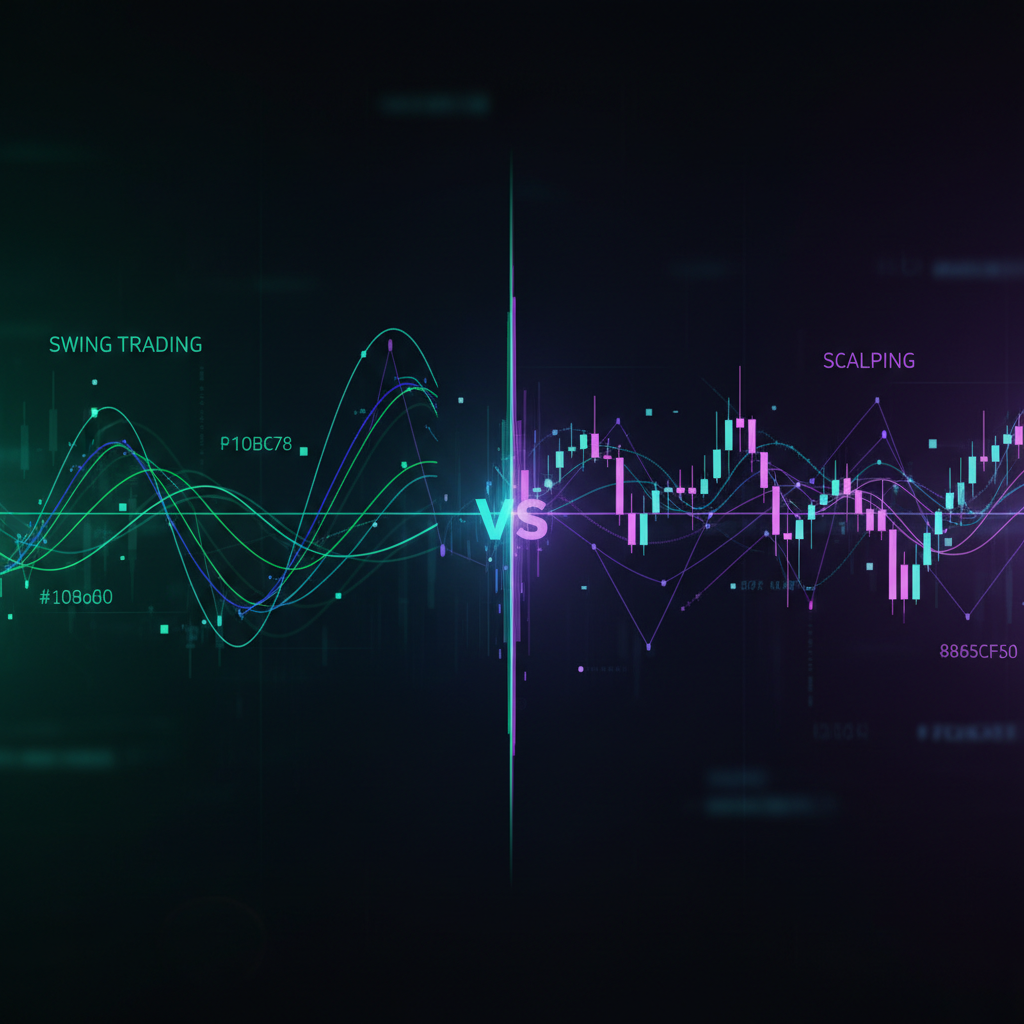
Many traders start with scalping. It feels exciting. Fast profits. Fast losses. But funded accounts require stability.
Scalping: Pros and Cons
Scalping offers many opportunities and fast feedback. But it comes with high stress, emotional overload, more spread exposure, and higher mistake frequency. Scalping increases psychological pressure.
The Hidden Costs of Scalping
Beyond the obvious stress, scalping has hidden costs that most traders don't calculate. Spread costs on 30+ daily trades can consume 1-2% of your account per week. Slippage during fast-moving markets adds another 0.5-1%. Commission fees compound. Over a month, these costs can total 8-12% of your account — before you've even made a profit.
There's also the opportunity cost. A scalper spending 6-8 hours per day watching charts could instead spend 30 minutes on H4 analysis and use the remaining time for backtesting, journaling, or simply living life. The hourly return on time invested is dramatically better for swing traders.
For prop firm traders specifically, scalping creates additional risk. The rapid trade frequency means more chances to hit the daily drawdown limit. One bad 15-minute period with 3 losing scalps can violate the 5% daily limit. On H4, this scenario is nearly impossible.
Swing Trading (H4): Pros and Cons
Swing trading on H4 offers fewer trades, clear structure, reduced noise, and better emotional control. The only con: it requires patience. Swing trading aligns better with funded trader discipline.
Learn about the best H4 trading strategy for funded traders.
Why H4 Is Powerful
H4 reduces random spikes, fake breakouts, and impulse entries. You trade structure — not noise.
Head-to-Head Comparison
Let's compare a typical month for each approach. A scalper takes 200 trades with 60% win rate, 1:1 risk-reward, risking 0.3% per trade. Expected profit: 200 × 0.3% × (0.6 - 0.4) = 12% gross. After spreads and commissions (approximately 4-6%): 6-8% net.
A swing trader takes 15 trades with 55% win rate, 1:2 risk-reward, risking 1% per trade. Expected profit: 15 × 1% × (0.55 × 2 - 0.45 × 1) = 15 × 1% × 0.65 = 9.75% gross. After spreads (approximately 0.5%): 9.25% net.
The swing trader achieves higher net returns with 13x fewer trades, 90% less screen time, and significantly lower psychological stress. For funded traders who need consistency over months, this difference compounds dramatically. Read about the psychology behind funded trader success.
The Funded Trader Perspective
If your goal is consistency, not adrenaline: swing trading wins. Filtering wins. Structure wins.
Explore the psychology behind funded trader success to understand why.
Conclusion
For funded traders, swing trading on H4 offers better emotional stability, lower transaction costs, and higher structural probability. The math, the psychology, and the practical reality all point to the same conclusion: trade less, filter more, win consistently. If you want a structured H4 decision engine designed for disciplined trading, explore GO ENGINE v2.
Want a structured H4 GO/WAIT decision engine?
GO ENGINE v2 scores trend, momentum, and structure — then prints GO or WAIT. No predictions. No noise. Only alignment. $29.99 one-time — lifetime access.
Related articles
Best H4 Trading Strategy for Funded Traders
Most retail traders trade too fast. Funded traders trade slow. The best H4 trading strategy is not about indicators — it's about structure.
The H4 Trading Strategy That Funded Traders Use
Retail traders obsess over lower timeframes. Funded traders don't. Why? Because lower timeframes amplify noise and emotion. H4 creates clarity.
The Psychology Behind Funded Trader Success
Why do some traders keep funded accounts for years — while others blow them in weeks? It's not intelligence. It's psychology.